
The mood was festive on August 5th as local dignitaries, cooperative development leaders, USDA’s State Rural Development Director, and Flower Hill Institute's Regional Directors joined Puerto Rican farmers beneath two tents offering shade from the searing sun on a hilltop in Guaynabo, Puerto Rico.
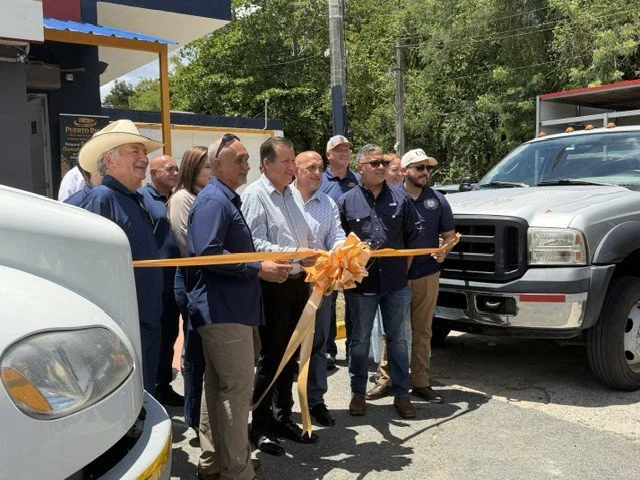
The occasion: the grand reopening of the Puerto Rico Meat Processing Center, acquired earlier this year by Cooperativa de Porcicultores de Puerto Rico, a cooperative owned by more than 70 hog producers in the region.
The facility was anything but a showcase when the co-op took ownership of the operating facility six months ago. Years of financial difficulties and neglected maintenance had taken their toll. Since March, workers have diligently transformed the facility into a gleaming, state-of-the-art facility that will expand the co-op’s pork marketing capabilities and offer new USDA-inspected, high-quality processing services for cattle producers. The facility can handle up to 400 beef cattle and 300 hogs each week.
That’s a significant step forward toward food security for an island whose residents now rely on imports for more than 91% of the beef and pork they eat each year.
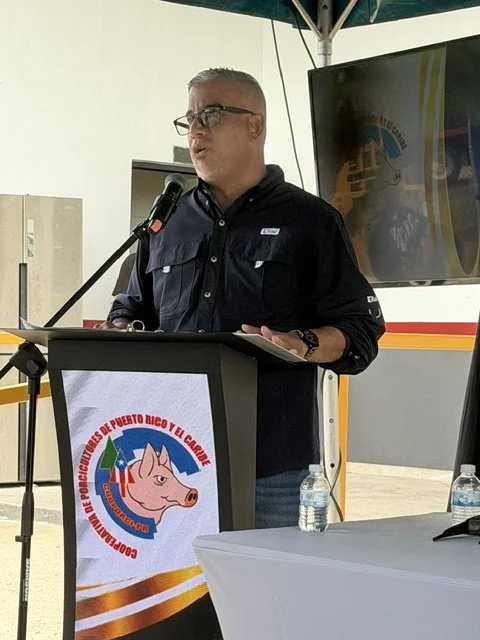
“This marks a turning point for the livestock sector on the Island,” Co-op President Angel Rodriquez told the roughly 75 people gathered for the grand opening. “Before this project, independent ranchers didn't have a place to bring their products and compete head-to-head with imported and local brands. From today onward, that changes.”
Eliezer Maldonado Pagán, operations director of the new center, added, “We have invested all our efforts in this project, since we were previously acting as intermediaries in the pork market. Now we are breeders, producers and processors, and can enter other markets. We are not only limited to the pork market, but we are also entering the cattle market and the markets for sheep, goats, and other livestock.”
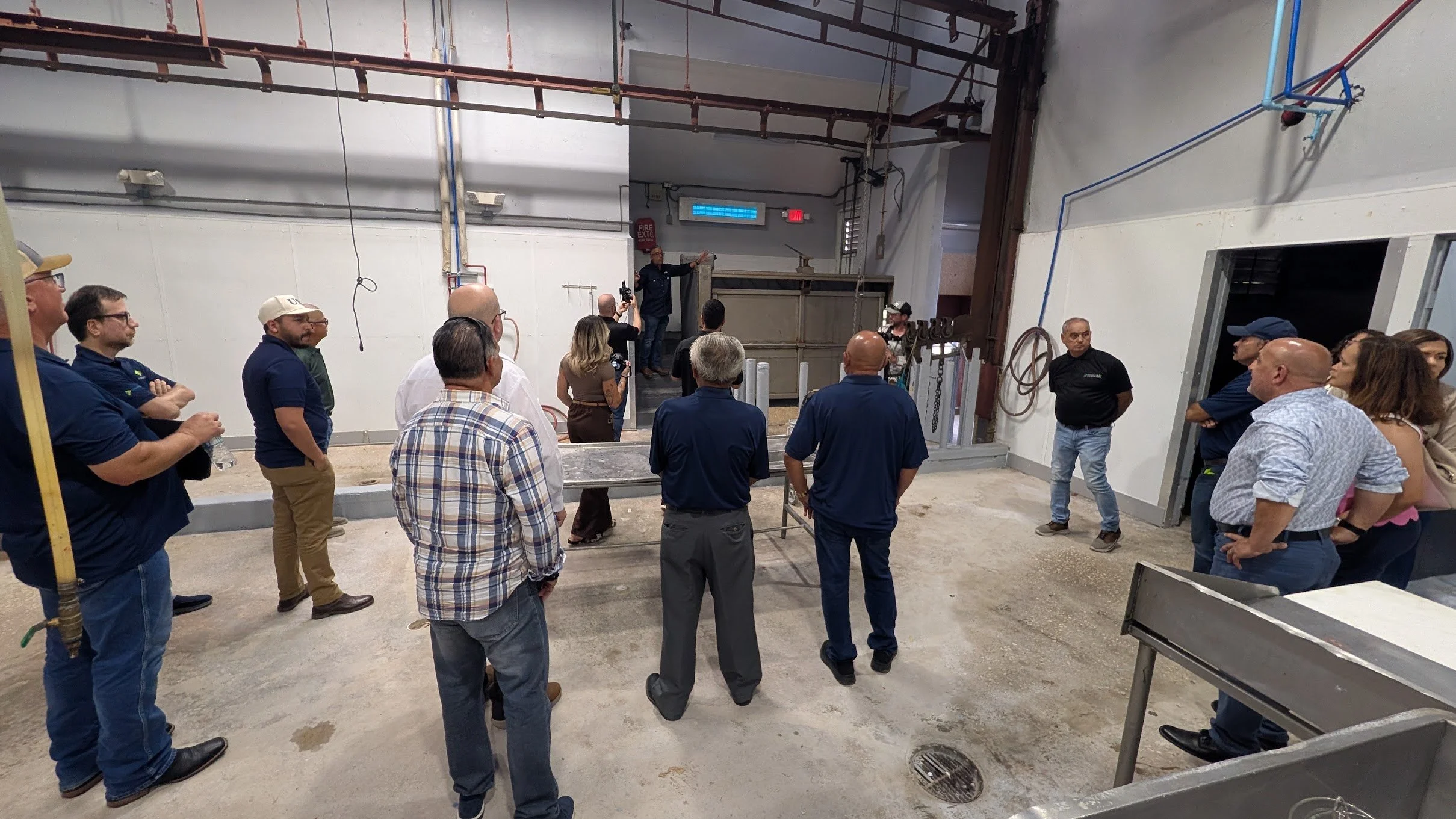
Pork processed under the co-op’s label will be destined for retail stores, restaurants, and institutional markets throughout the island. The co-op will initially process all beef on a toll basis for farmers seeking to develop their own branded products but may introduce its own labeled beef in the years ahead.
Additionally, the co-op is working with the Tennie Group, a North Carolina Agribusiness firm, to provide farmers utilizing the processing facility with financial planning and accounting services.
The new 7,500 sq. foot multispecies processing center in Guaynabo is only the latest chapter for the co-op, which began when five farmers got together in 2013 with the goal of processing and marketing their own hogs. They launched their venture in 2017 with the sale of seven hogs.
“Other farmers were laughing at them,” Eliezer recalls.
Undeterred, the co-op steadily grew by using an outside facility to toll-process whole roasting hogs for restaurants known as lechoneras along the famed Pork Highway south of San Juan.
But Angel, Eliezer, and other co-op leaders wanted to drive their markets beyond the Pork Highway.
Flower Hill Institute began providing technical assistance for the co-op in 2022, when RAFI (Rural Advancement Fund International) introduced Regional Directors Chris Roper and Dave Carter to Angel, Eliezer and other co-op leaders through a series of Zoom meetings.
Dave and Chris made their first site visit to Puerto Rico in March 2023 and began supporting the co-op leaders as they worked to fulfill that vision. That work continued over the past three years as the co-op endeavored to acquire and upgrade the facility in Guaynabo.
Also working hand in hand with Cooperativa de Porcicultores de Puerto Rico was FIDECOOP, led by Executive Director Jose Julian Rameriz Ruiz. FIDECOOP was awarded $8 million through USDA's Meat and Poultry Intermediary Loan Program (MPILP) in 2023 and directed those funds toward low-interest financing to help the co-op purchase the processing facility.
FIDECOOP has an established track record in financing cooperatives. However, the MPILP loan provided to Cooperativa de Porcicultores de Puerto Rico represented the largest financing transaction FIDECOOP had undertaken within the agricultural sector.
Jose noted, “Having a cooperatively owned processing facility is very important to the food security of Puerto Rico. Having the opportunity to dedicate part of our portfolio to food and agriculture is very important.”
Jose said that having Flower Hill Institute provide technical assistance to the cooperative gave FIDECOOP confidence in the security of the financing they were providing. “Flower Hill helped FIDECOOP by introducing us to other MPILP lenders who helped us develop our lending and underwriting guidelines,” he added.
Following the grand opening, Eliezer reflected on the significance of the new processing facility.
“This is a great asset for the farmers of Puerto Rico,” he said. “The technical assistance provided by Flower Hill, the financial support provided by USDA through FIDECOOP, and the dedication of our farmers all helped bring us to this day.”
“This is a milestone, but it's not our final goal. With the support of USDA, Flower Hill, FIDECOOP, and others, we will use this facility to bring more Puerto Rican pork, beef, and lamb to the Puerto Rican people.”
Jose added, “This processing plant will help create a future for the next generation of farmers in Puerto Rico.”
