
Mainland U.S. tourists generally view the U.S. Virgin Islands as tropical getaways featuring emerald blue bays rimmed with soft, sandy beaches perfect for soaking in the sun while enjoying a fruity umbrella drink. Port towns where cruise ships dock ebb and flow with tourists looking for local cuisine, jewelry, and souvenirs.
Beyond the tourist enclaves, though, are farms and villages populated by friendly farmers with gritty determination working to ease the islands' severe dependence on imported food to feed their families and their local communities.
Among those farmers on St. Croix are Dale and Yvette Browne of Sejah Farms. Dale and Yvette have dedicated their lives to increasing the Virgin Islands’ food security. It’s a daunting task. The islands import roughly 97% of the food consumed each year. That creates a frightfully fragile situation, particularly in a region periodically paralyzed and isolated by vicious hurricanes.
Livestock is important. Much of the islands’ terrain is mountainous, featuring shallow, rocky soils. More than half of the farmers living there rely on livestock production, with cattle, lambs, goats and hogs dotting the landscape. Processing, though, is a significant barrier.

The U.S. Virgin Islands Department of Agriculture is working to address that barrier, but continues to be hampered by limited resources. The Department established a government-owned abattoir several years ago; a clean, sturdy facility equipped with the infrastructure for basic harvest and cut & wrap services for cattle, hogs, sheep and goats. The abattoir lacks equipment and areas to produce smoked meat or value-added products, or to process offal. As a result, many farmers still process their animals “in the bush" to capture as many products and possible from each carcass.
During the past two years, Flower Hill Institute has been working with the Brownes, and USVI Ag Department Abattoir Director Curleen Rogers to assist in the expansion necessary for the facility to better serve producers and operate in a financially stable manner.
Curleen was one of the leaders sharing information and ideas at the Second Annual Farmers Forum hosted recently by Sejah Farms. For years Dale and Yvette have hosted “Bush Cook, Chef Cook”, a multi-day event bringing chefs and farmers together to celebrate Caribbean culinary traditions and build the farm-to-table movement.
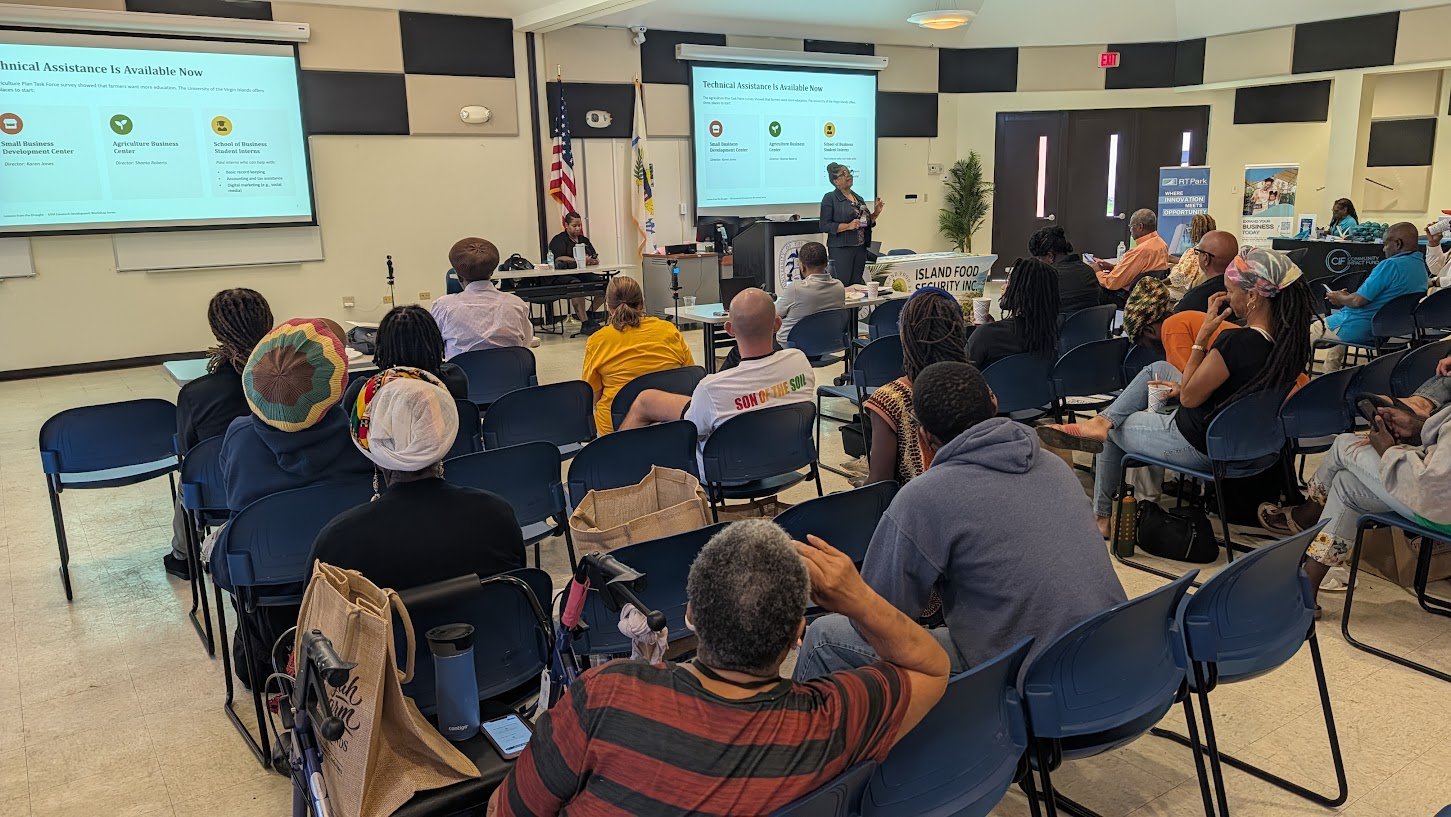
The farmers’ forum conducted for the past two years has provided a deeper dive into the challenges, and the opportunities, for USVI farmers. Flower Hill Regional Director Dave Carter attended the workshops hosted by the Brownes at the University of the Virgin Islands and at their Sejah Farms to discuss the importance of appropriate processing infrastructure to help farmers obtain better carcass utilization from the animals they take to market, and to serve retail stores, restaurants, and institutions across their islands.
The journey has started, but it is far from complete. The goal is worthwhile. In 2024, the U.S. Virgin Islands imported nearly $40 million in meat and poultry products. If the islands' estimated 180 livestock farms could capture 10 percent of that value, their average gross revenues would jump by more than $22,000 each.
The challenges are significant, but the need is imperative. Dale, Yvette, Curleen and other leaders across the Virgin Islands are working to make it happen.
