
It began with a 15-liter hand-cranked stuffer.
That’s where Maarten Van Zoeren of Simla Frozen Food Locker in southeastern Colorado pins the birth of his meat processing business.
Maarten came to the United States in 1990 at the age of 15 when his parents immigrated from the Netherlands to the small eastern Colorado community of Simla. They bought a frozen food locker there and began processing local meat.
Maarten didn’t have the financial resources for college and couldn’t enlist in the military because he was born overseas, so he focused on growing the business his parents had acquired.
He measures that growth in meat stuffers.
“I started with a 15 liter hand-cranked stuffer,” he said during a recent site visit by Flower Hill Institute Regional Director Dave Carter.
“We outgrew that and bought a 50-pound piston stuffer. Before long, we had to acquire a 150-pound stuffer with a clipper. Then we started to make smoked Kielbasa, so we added a smokehouse. Because of the number of hogs we were processing, we were doing 400 pounds of bacon per week, so I bought a slicer,” Maarten recalled.
Maarten processed all these products as a custom-exempt processor, but demand always seemed one step ahead of his capacity.
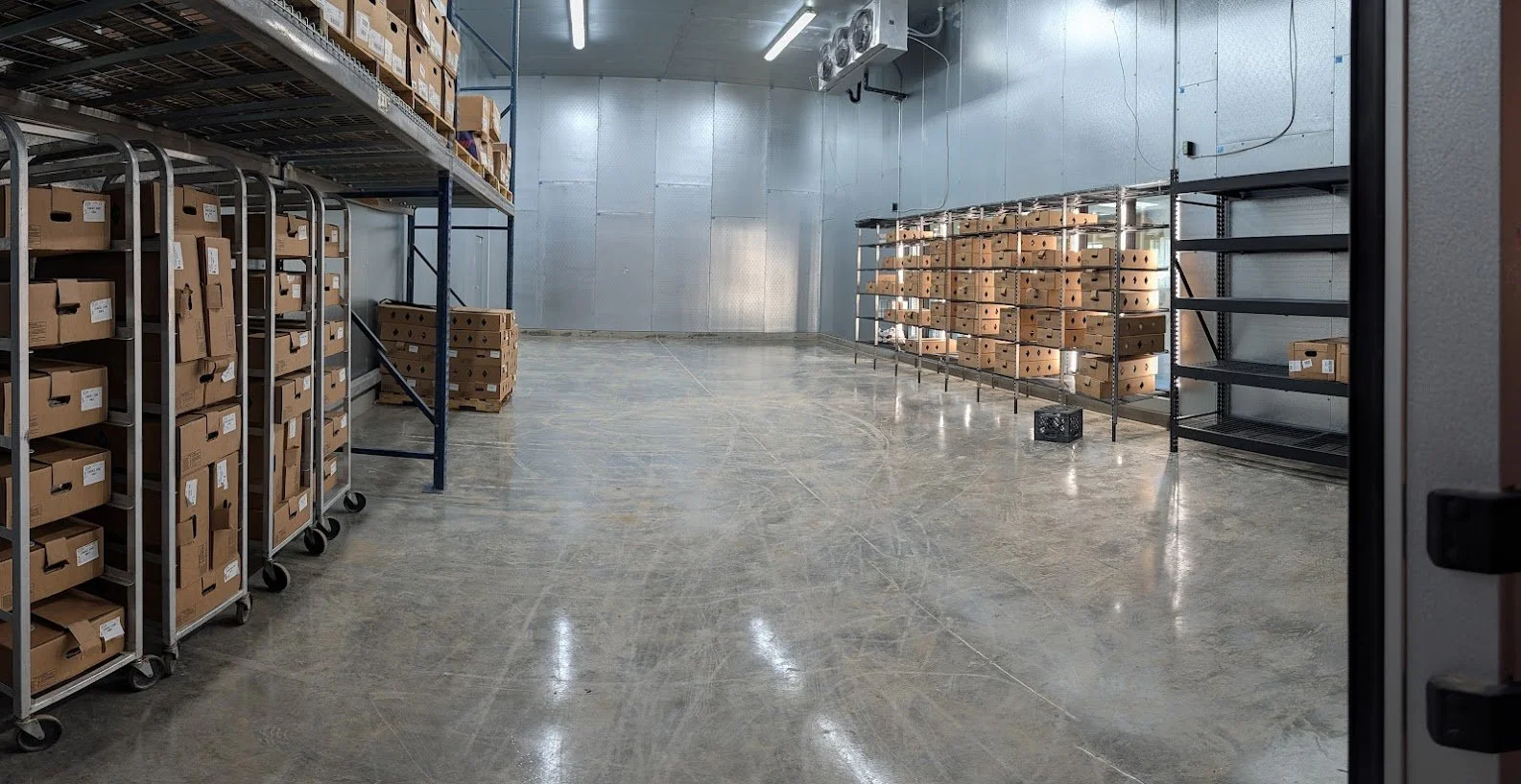
“Then I saw there was an MPPEP (Meat and Poultry Processing Expansion Program) grant open, and I said, ‘I’ll apply for one of those and build a whole new USDA-inspected plant.”
Maarten received a $400,000 MPPEP 2 grant and broke ground for a new 18,000 sq. ft. processing facility and retail store last year. The retail space is nearly complete, and work is underway to finish the harvest floor and processing areas.
When completed, Simla Frozen Foods will provide an important processing resource for producers of beef, bison, hogs, lambs, and goats in the area, as well as its own branded meat and value-added products.
“My goal is to be open with my new facility by the end of next year,” he said.
Operating his existing customer-exempt business complicates his ability to keep everything on schedule with the new facility. He is thankful for the technical assistance provided by Flower Hill Institute and the guidance of Terri Birch at New Hampshire Community Loan Fund in navigating the complexities of the grant application and compliance processes.
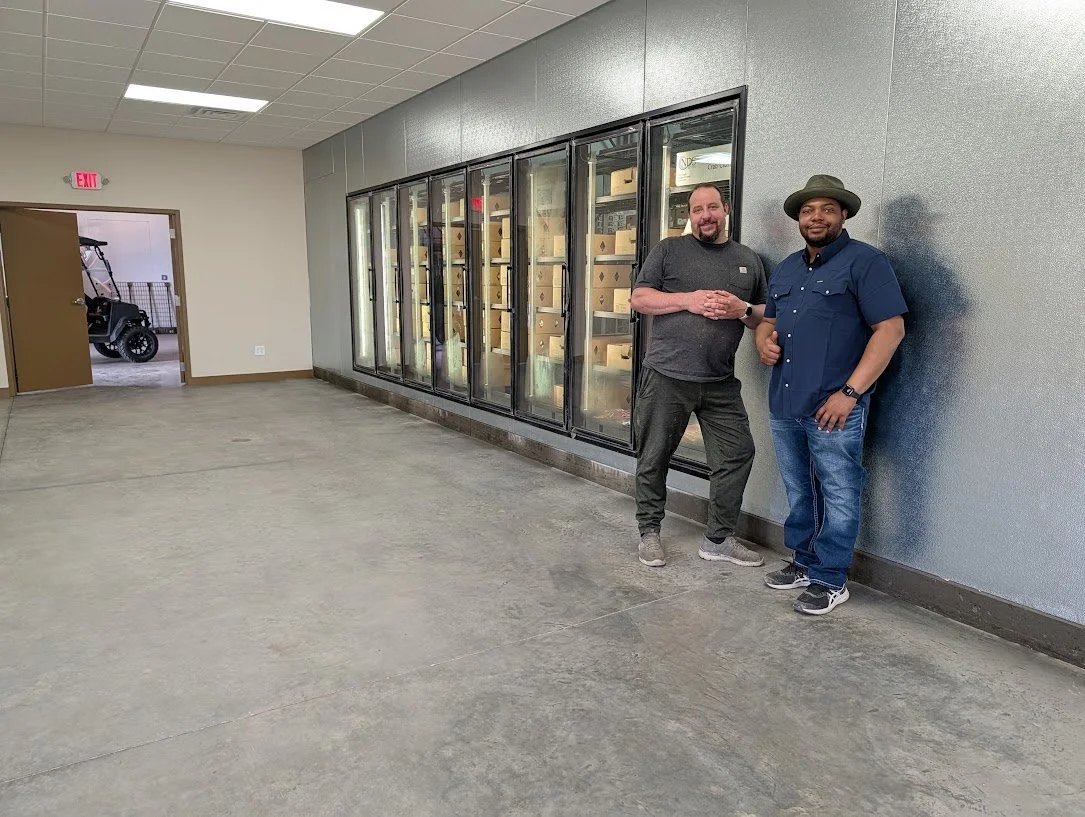
A few years ago, Maarten connected with Terrance Boyd, a Denver native who longed to be in agriculture. Terrance bought a small farm near Simla, moved from the city, and began raising chickens, hogs, and small ruminants.
Terrance brought his first harvest hogs to Maarten’s processing plant in kennels in a pickup truck. Maarten saw that Terrance was inexperienced but determined and began serving as a mentor to the young rancher. The two became friends, and Terrance now serves as Maarten’s sales manager.
Maarten has big plans for his larger enterprise. He wants to provide his local community with a variety of products and expand the processing opportunities for local ranchers. His ultimate goal is to export high-quality products from his plant to the Netherlands, where he was born.
He’ll likely need a larger stuffer for that.
